By Chantel Idaehoagbon

Various social media platform icons, including X (formerly Twitter), Instagram, Facebook, and LinkedIn
Technology has become part of how I understand myself and how I connect with others. How I use social media, mobile apps, and online platforms influence my perceptions of self-identity. Sometimes it may happen that the way I present myself online is different from who I am offline. According to Sherry Turkle, most people create a “second self” in the virtual world where they can show a version of themselves that feels more confident and interesting in some ways (Week 7 – Technology and Our Sense of Self, 2025.). I can relate because sometimes I only post the good times, which makes it seem like I am happier than I really am. Liu’s (2023) found that that exposure to idealized images via social media may affect people by making them compare themselves with others and have lower self-satisfaction. In spite of this, technology gives me methods to learn and express myself and connect with people across the world, helping me build my identity in a positive way.
Technology has transformed the nature of my communication and relationship maintenance. Through WhatsApp or video calls, I can easily communicate with the family members in other countries and this makes us stay together even when we are miles apart. Li et al. (2022) argue that the time spent by people on communication with friends and family increases with the internet use, which confirms my experience. Nevertheless, the negative aspects also exist. I sometimes feel out of touch even during online chatting since it is not as warm as having a face-to-face conversation. I also observed that individuals including myself occasionally look at our phones even when we are with our families and this may cause emotional detachment. Turkle refers to this as the tethered self, in which we need to receive continuous digital feedback in order to feel connected (Week 7 – Technology and Our Sense of Self, 2025). This reliance may cause us to be lonely, despite the presence of other people. I believe that the trick is to utilize technology to reinforce the real relationships instead of substituting them.
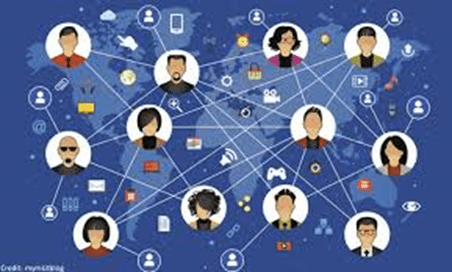
Technology has also transformed my membership of various communities. Online spaces enable me to participate in groups that I have similar interests such as parenting forums or nursing student groups. These online communities provide me with support, motivation and practical assistance. Indicatively, I have been able to find solace during stressful school days through online communication with fellow students who are undergoing the same predicament. In a study carried out by Al-Khasawneh et al. (2023), online communities were found to enhance engagement and social support, which translate to a stronger sense of belonging. Meanwhile, the fact that we are included in the online groups may at times pressure us to conform to the group norms or views. Nevertheless, I believe that such communities are worthwhile as they enable individuals with varying backgrounds to have a sense of meaning and belonging. They also indicate what sociologist Erving Goffman referred to as varying roles on varying stages, as we use slightly different selves in different communities we are in (Week 5 – Technology-mediated Relationships, 2025).
Technology provides numerous options of expressing oneself. I rely on social media to share photos, brief thoughts, and creative work. These platforms enable me to find various aspects of myself, including my career aspirations as well as my personal interests. Turkle is of the opinion that digital tools enable us to test out identities and I agree that is correct (Week 7 – Technology and Our Sense of Self, 2025). There are cases when individuals find new abilities or natures of themselves over the internet. As an example, I have participated in an online art competition that made me feel confident in my artistic abilities again. Nevertheless, I too have experienced the burden of only showing the best side of my life, which may get exhausting. According to Liu (2023), such a perfected self-presentation can cause emotional stress, particularly when individuals begin comparing themselves to others. This demonstrates that digital self-expression can create and undermine our identity. Nevertheless, technology can provide us with an opportunity to be creative and authentic when we use it in a mindful way.
With the ever-changing technology, I believe that it will continue to influence our identity and the nature of our relationships. The use of artificial intelligence, virtual reality and metaverse platforms are already altering the way individuals perceive identity and relationships. We can spend even more time in the digital realms that seem real in the future, and this will enable us to be creative and community. Nevertheless, risks are present even, including the danger of losing the sense of genuine self-awareness or being overly reliant on the approval of the virtual world. According to Bibian and Ma’rof (2024), the social support and peer influence have a significant effect on the development of the self-concept of the young people. This implies that we should create enabling spaces on the internet in the more digital future so that our sense of identity remains healthy. In my opinion, technology must be employed to connect the people in a meaningful manner rather than substituting the actual emotions or relationships.
References
Al-Khasawneh, M., Al-Haddad, S., Sharabati, A.-A. A., Al Khalili, H. H., Azar, L. L., Ghabayen, F. W., Jaber, L. M., Ali, M. H., & Masa’deh, R. (2023). How Online Communities Affect Online Community Engagement and Word-of-Mouth Intention. Sustainability, 15(15), 11920. https://mohawkcollege.primo.exlibrisgroup.com/permalink/01OCLS_MOHAWK/h5j9gn/cdi_proquest_journals_2849125189
Bibian, O. E., & Ma’rof, A. A. (2024). The Impact of Social Media Usage, Social Support, Peer Influence, and Social Identity on the Self-Concept of Youths in Enugu East Local Government Council, Nigeria. International Journal of Academic Research in Business and Social Sciences, 14(12). https://hrmars.com/index.php/IJARBSS/article/view/24031/The-Impact-of-Social-Media-Usage-Social-Support-Peer-Influence-and-Social-Identity-on-the-Self-Concept-of-Youths-in-Enugu-East-Local-Government-Council-Nigeria
Li, C., Ning, G., Xia, Y., Guo, K., & Liu, Q. (2022). Does the Internet Bring People Closer Together or Further Apart? The Impact of Internet Usage on Interpersonal Communications. Behavioral Sciences, 12(11), 425. https://mohawkcollege.primo.exlibrisgroup.com/permalink/01OCLS_MOHAWK/h5j9gn/cdi_doaj_primary_oai_doaj_org_article_eb047ce38e8f4390bcc2046a7c279782
Liu, Y. (2023). Impact of virtual identities on social media on women’s self-esteem. SHS Web of Conferences, 180, 2005. https://mohawkcollege.primo.exlibrisgroup.com/permalink/01OCLS_MOHAWK/h5j9gn/cdi_doaj_primary_oai_doaj_org_article_a3da05b74dbf4f248fb64327ecd2a559
Week 5 – Technology-mediated relationships. (2025). https://mycanvas.mohawkcollege.ca/courses/120924/pages/week-5-technology-mediated-relationships?module_item_id=6553837
Week 7 – Technology and Our Sense of Self. (2025). https://mycanvas.mohawkcollege.ca/courses/120924/pages/week-7-technology-and-our-sense-of-self?module_item_id=6553841
 Site Title